Segovia puts history, culture and open country together in a way few places do. Its heritage — some of it World Heritage — reflects a long and varied past. Beyond the history, the food is remarkable: roast suckling pig and milk-fed lamb are only the start of it. Here is what to see in Segovia in a day, for nothing.
The monuments you cannot miss
Segovia’s heritage is remarkable, with buildings that carry its whole history in them.
The aqueduct
The Roman aqueduct is the most striking and the most recognisable thing in the city.
How it was built
Built in the second century AD to bring water from the sierra into the city. That it is still standing makes it a symbol of ancient engineering.
The Postigo del Consuelo viewpoint
From here you get the aqueduct and the country behind it, the Sierra de Guadarrama included.
Plaza del Azoguejo
The heart of the city and where the aqueduct stands. A busy square, and a good place to eat while the city goes past.
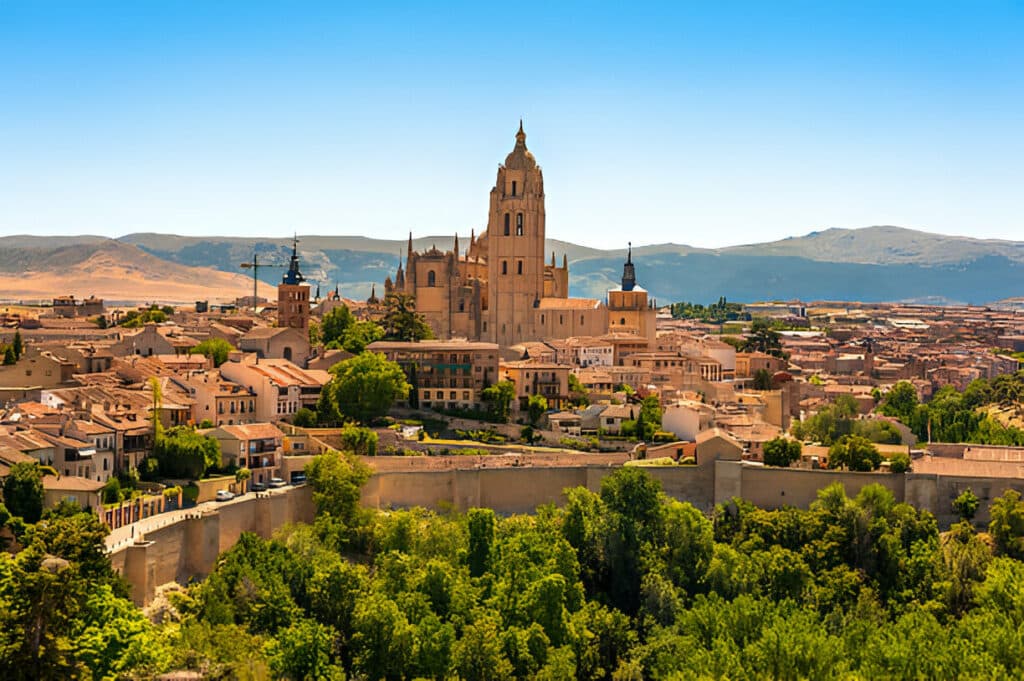
Santa María cathedral: the lady of cathedrals
One of the masterpieces of Spanish Gothic, and the landmark of the Plaza Mayor.
The architecture
Built in the sixteenth century, with a façade and stained glass that show what the period could do.
The bell tower and the view
Nearly 90 metres up, with the whole of Segovia and the country around it below.
Opening hours and guided tours
The tours are worth the time, and the opening hours give you room to go through the interior properly.
The Alcázar
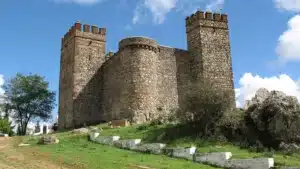
A fortress shaped rather like the prow of a ship, and a witness to a good deal of history.
What it has been used for
A royal palace, a prison and a military academy — the city’s own history in one building.
The keep and the view from it
From the keep you get the city and the country around it, which makes it unmissable.
Getting to the top
You can climb to the top of the Alcázar, which gives you the landscape around Segovia in full.
The museum inside
Inside there is a museum on the fortress’s history, with interactive displays.
The old town
Segovia’s old town is a remarkable mix of history and culture.
The Jewish quarter and the old synagogue
A walk through the Jewish quarter shows what the Sephardic community left, in alleys that carry their own history.
San Lorenzo and its Romanesque churches
A quarter full of Romanesque churches, and a delight for anyone who cares about architecture.
Plaza Mayor and the Puerta de San Andrés
Both are where Segovia’s street life happens, with the history close at hand.
For more, there is the Segovia tourist office , which will answer whatever you need to ask.
The country, the food and the rest
Segovia combines remarkable country, very good food and things you will not do elsewhere.
Where to walk
Walking in the Sierra de Guadarrama
North of Segovia, and very good walking country. The routes run from a gentle stroll to a serious climb, and all of them put you among the region’s plants and wildlife, with the views to go with it.
Along the Eresma and the Clamores
Two quiet routes for an unhurried walk. The banks are exactly the place for a picnic, in country that invites you to slow down.
The Alameda de la Fuencisla and Boca del Asno
Both are popular spots: right for a family picnic, a meal outdoors or simply a walk. Quiet, and very good country.
The local food
Roast suckling pig and milk-fed lamb
Segovia is famous for its roast suckling pig, and you should not leave without it: crisp skin, tender meat. The milk-fed lamb is the other one, and it shows the region’s cooking at its best.
Judiones de La Granja and ponche segoviano
The large white beans of La Granja are the other local speciality, and for pudding the ponche segoviano does not disappoint.
Dónde Comer Sano: eating consciously in Segovia
A useful resource for anyone who wants to eat well here sustainably: it lists restaurants committed to both quality and sustainability.