
Staying active improves your quality of life and your health. On GoRandom we are for an active, healthy life in which being outdoors counts as much as the exercise itself. A personal trainer makes health goals easier to reach: their experience shapes the training around you and keeps the motivation going. Here we go through what exercise does for your health and how a personal trainer in Valencia can help you get there.
What exercise does for your quality of life
Regular physical activity has a significant effect on quality of life, across both physical and mental health.
What regular training does for the body
Regular exercise is associated with:
- a stronger cardiovascular system;
- more muscle mass and more endurance;
- better flexibility and balance;
- weight control and less body fat.
An active life means better circulation and better lung function, which shows in how much energy you have.
What it does for your mind
Exercise matters as much for mental health as for the body. It helps to:
- reduce stress and anxiety;
- improve your mood, through the endorphins released;
- build self-esteem and confidence.
Which makes exercise a powerful tool for emotional balance.
Preventing illness
An active life is central to preventing chronic illness. Regular activity has been shown to:
- lower the risk of cardiovascular disease;
- prevent type 2 diabetes;
- reduce the incidence of certain cancers;
- mitigate the problems that come with obesity and a sedentary life.
Keeping active is essential to good health over a lifetime.
For men, an active life also affects sexual and urological health: looking after the cardiovascular system helps prevent problems such as erectile dysfunction. If anything appears, see a specialist in men’s health.
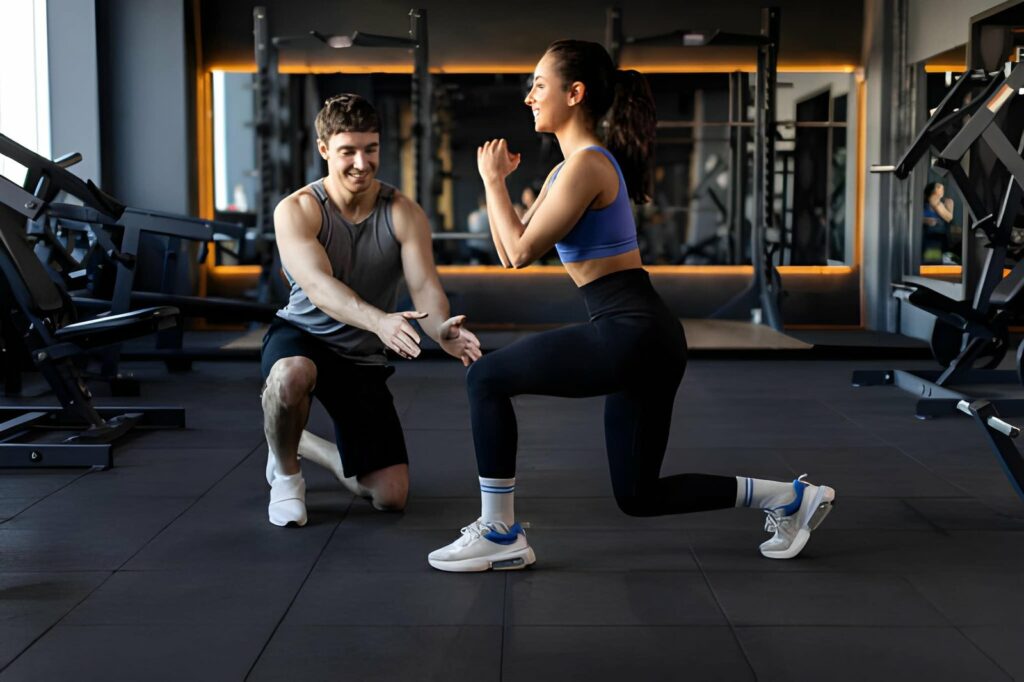
How a personal trainer helps
A personal trainer makes the process of reaching health goals considerably more efficient.
A programme built for you
The trainer builds a plan around your specific needs, taking account of:
- physical limitations and current fitness;
- your own goals.
Your limitations and your fitness
An initial assessment shapes the programme. It reduces the risk of injury and makes the exercises more effective.
Fitting the training into your life
Trainers adapt the times and the format so that the training fits your routine, which is what keeps it going.
Follow-up and motivation
The trainer’s support keeps you focused, and being able to adjust the plan is what produces results.
Measuring progress and adjusting the goals
Regular assessments measure results and adjust the targets, so that anything in the way can be dealt with.
Staying committed
Having the trainer there is what stops people giving up.
Technique, injury and results
Doing the exercises correctly is essential, and proper technique is what keeps the training safe.
Doing each exercise safely
Trainers teach the correct execution of each exercise, which avoids injury and makes the training more effective.
Preventing and managing injuries
A trainer’s technical knowledge anticipates injuries and, when one happens, manages the recovery so that the return to training is safe.
What else a trainer brings
A trainer’s knowledge goes beyond the exercise itself, into nutrition and a wider view of health.
Nutrition and training
Nutrition is central to both performance and general health, and a trainer can advise on it for your particular case.
Eating plans that match the training
These are built to get the most out of the training, making sure the nutrients match the type of session and the goal, and adjusting the diet for performance and recovery.
Applied physiology
Trainers use physiology to design programmes that get the most out of you. Understanding how the body responds is what makes a regime both effective and safe.
A wider view of health
A trainer deals with more than the physical side: emotional and mental wellbeing are part of the method.
How physical, mental and emotional health connect
The relationship between activity and mood is a deep one. Training regularly lifts the mood and reduces stress, and that shows day to day.
Training for overall wellbeing
Training that takes the whole person into account produces general wellbeing — less stress, better self-esteem, and people who look and feel better for it.