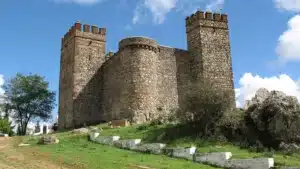
A gymkhana is a team competition in which you work through challenges of wit, skill or sport along a course. It began in nineteenth-century India and is now popular outdoors, on foot and in vehicles.
Organising a a gymkhana means choosing the place and the course, designing the challenges and picking the participants — all of it towards teamwork and cooperation. There is a great deal of variety in the challenges, from skill and agility to a treasure hunt.
They work at any age, for children and adults alike. There are digital versions, and versions in cars and other vehicles. A gymkhana can also be built around the cultural heritage of a place, which turns it into a way of seeing it.
Where gymkhanas came from
Origin and development
They began in nineteenth-century India, in sporting competitions over obstacles known as khana. By the end of that century the practice had spread to England and the United States, where it became entertainment at fairs and carnivals.
In the early twentieth century they entered education and sport programmes, and by the 1950s they were a common after-school activity for building teamwork.
Where the word comes from
According to the Spanish Royal Academy , the Spanish word yincana comes from the Anglo-Indian gymkhana, , meaning a set of tests of skill or wit carried out in teams along a course, usually outdoors.
Several spellings are in use for the same thing: gymkana, yincana, gincana and ghinkana.
Gymkhanas in different countries
They are run all over the world, adapted to each culture. For instance:
- United States: popular in summer, at camps and in parks, with sporting and water challenges.
- Japan: known as undōkai, run at school and community events to build a competitive and sporting spirit.
- Mexico: part of the Day of the Dead celebrations, built around treasure hunts and challenges specific to Mexican culture.
They vary a great deal by country, but they all have teamwork and enjoyment in common.
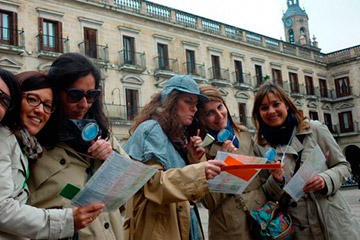
How to build one
The place and the course
First choose the place. Outdoors, preferably, and somewhere suited to sport and games: safe, in good condition and with enough room for everyone.
Then design the course. Its length should match the number of challenges, and it has to be signed so that nobody is in doubt about the route.
The challenges
With the place and the course settled, choose the challenges. There is no shortage of them, but they have to suit the place, the number of participants and their age.
They should be enjoyable, safe and demanding enough to hold everyone’s interest through the whole thing. An obstacle race, a treasure hunt, a trust game.
The teams
How the teams are put together matters. Balance them by age, ability and interest.
Pick a leader for each team and set the rules. That is what keeps the competition healthy and the teamwork real.
The kinds of challenge
Skill and agility
The most popular. Participants get over obstacles and show what they can do in balance, strength and body control: climbing a tree or a wall, jumping obstacles, balancing on a rope.
Ball games and races
Right for an outdoor gymkhana. Running, throwing or striking a ball, individually or in teams: dodgeball, basketball; sprints or obstacle races.
Sport outdoors
Another popular option, since the point is enjoying yourself outdoors: football, badminton or rugby, and walking or cycling on suitable ground.
Treasure hunts and the like
These add a dimension to the day. Participants follow clues and solve riddles to find a treasure or a prize. You can also run games such as paintball or laser tag, where the teams compete for the objective.
For children and for adults
For children
Children enjoy them enormously. The challenges have to match their age and carry no risk. Some ideas:
- races and relays;
- a treasure hunt with hidden objects;
- an obstacle race;
- tests of skill and balance.
For adults and children together
A gymkhana can work for both at once. The challenges have to interest both groups and none of them can be dangerous for the youngest. For instance:
- tests of skill, such as target games;
- obstacle races;
- ball games and relays;
- puzzles and mental games.
Challenges for every age
A gymkhana is a very good way of getting people of different ages to work together. The challenges then have to interest everyone and put nobody at risk. For instance:
- ball games and relays that work at any age;
- puzzles and mental games adapted by age;
- tests of skill and balance adapted by age, such as target games or obstacle races;
- outdoor activities that carry no risk.
Digital gymkhanas and what they do for a place
Gymkhanas in the digital age
Technology has given us new ways of doing this, and the digital gymkhana is one of them.
It is not unusual now to find versions that combine the game with the technology, and that give a team something rather different to do.
The tourist gymkhana, and what it does for a town
The digital tourist gymkhana draws visitors from all over, and it is a rather good way of getting to know a city.
It also does a great deal for a town socially and economically, bringing visitors in and money to local businesses.
The digital products
Beyond the tourist version there is a range of digital products built for this: chatbots, totems and other elements that can be added to a traditional gymkhana to widen what it can do.