
Cairo has the oldest metro in Africa and the worst traffic on the continent. The two facts are related: underground, a journey that takes an hour on the surface is done in fifteen minutes for less than half a euro.
The metro opened in 1987, the first in Africa and the Arab world. Three lines: 1 (Helwan–New El-Marg) runs north to south along the east bank; 2 crosses the Nile towards Giza; and 3 runs east to west and is still growing.
The hub of the system is Sadat, under Tahrir Square, where lines 1 and 2 cross and where you come out for the Egyptian Museum. Practically any plan in the centre passes through there.
The fare goes by number of stations, in four bands, and it is extremely cheap even on a local budget. There are carriages reserved for women, marked on the platform, and they are respected.
What the metro does not quite solve is Islamic Cairo — Khan el-Khalili, the Citadel, the mosques — where it leaves you close but not at the door, and the last stretch is on foot or by taxi.
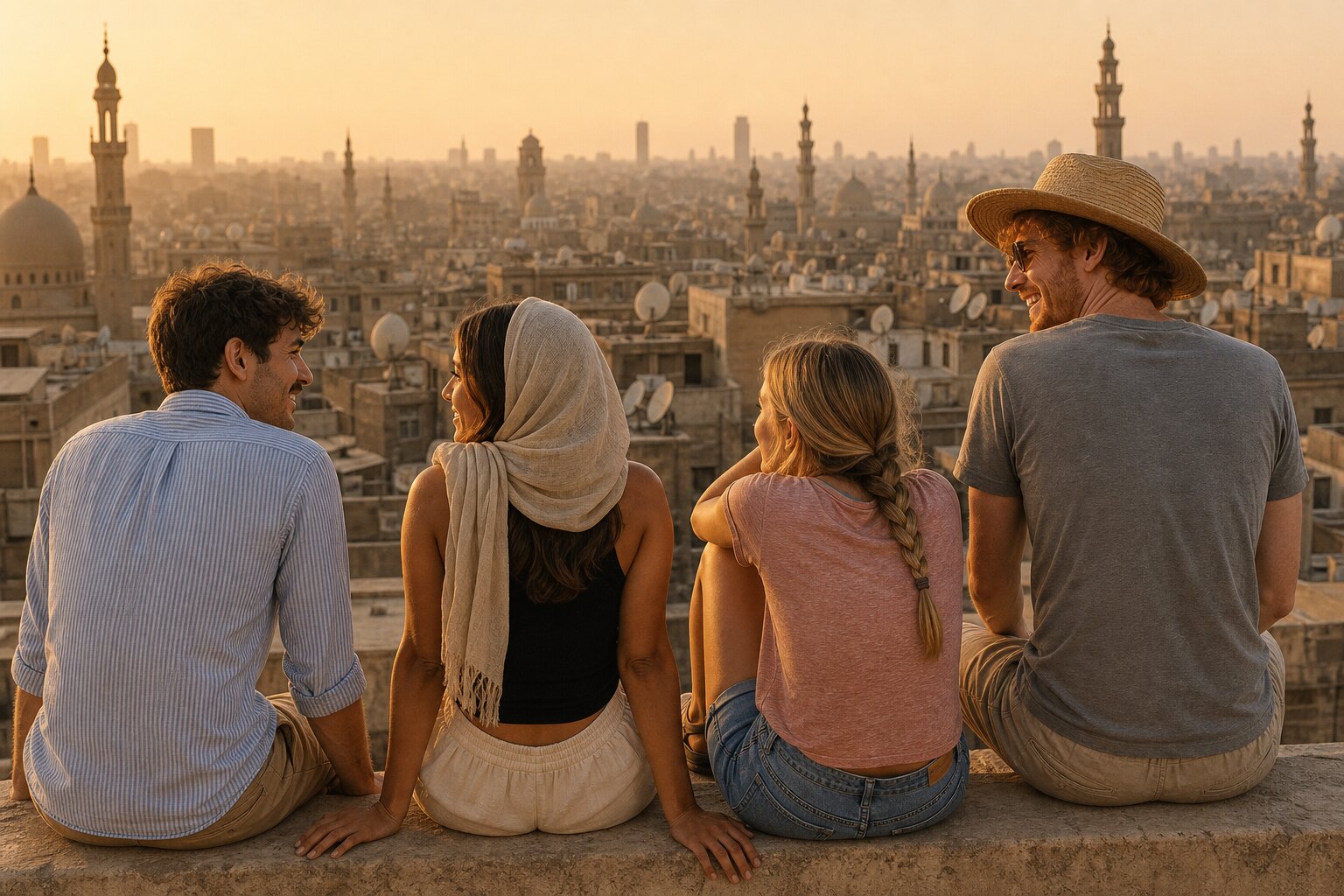
The pyramids included, obviously, but without letting them eat the trip: the city itself is worth three or four long days.
Everything above you can do on your own with this page open. This other thing we build for you: the same idea as always — you do not know what you got until the day before — applied to Cairo.
You choose where you fly from and where you are going, and we tell you what the adventure costs and roughly what getting there would cost. Flights and accommodation you book yourself: we are not a travel agency and we do not want to be.
The fare goes by number of stations, in four bands. It is one of the cheapest metros in the world and also one of the fullest.
The metro is by a distance the best transport decision you can make in Cairo: on the surface the same journeys take four times as long and cost twenty times as much.
If you want it line by line — which stations each one has, what is around every stop and how to work out a specific journey — we have all of it at our guide to the Cairo metro. It is one of the sites we publish ourselves, and it is free.
Cairo international airport is to the north-east and line 3 has been creeping closer, though the final link is still by road.
Four full days: one for Giza and its museum, one for Islamic Cairo, one for Coptic Cairo and the Tahrir museum, and a fourth for Saqqara and Memphis, which are the other half of the story and which almost nobody visits.
It goes in station bands: 10 EGP up to nine stations, 12 EGP from ten to sixteen, 15 EGP from seventeen to twenty-three and 20 EGP from twenty-four upwards.
Not to the door. The metro gets to Giza station on line 2, and from there it is about ten kilometres by short taxi or bus. Even so it is far quicker than crossing the whole city by car.
For a traveller, yes in terms of violent crime. What there is, is constant commercial pressure in tourist areas and the odd classic scam on the Giza plateau. Book guides and horses through formal channels, not at the gate.
Yes. It sits beside the pyramids and has been receiving much of the collection that was at Tahrir, the Tutankhamun treasures included. The sensible thing now is to combine it with Giza on the same day.
This is what we do when we travel. The other thing we do is build adventures where you do not know which activity you got until the day before.