
Tbilisi costs one lari a ride, has sulphur baths in the middle of town and one of the deepest escalators in the world. It is comfortably the European capital with the best ratio between what it costs and what it gives you.
The metro opened in 1966 — the fourth in the former USSR — and it is two lines: 1 (red), Akhmeteli–Varketili, running north to south through the centre, and 2 (green), branching off towards Saburtalo. They cross at exactly one point: Station Square.
Twenty-three stations and about 27 kilometres for half a million passengers a day. It is small, but it is laid out exactly where it needs to be, because Tbilisi is a long narrow valley between mountains and practically everything happens along the Kura river.
The stations are very deep — the terrain forces it — and some escalators take over two minutes to descend. That is not a fun fact: build the time into your journeys.
For the old town, on the other hand, the metro is not much use: you walk and you climb. The good news is that the historic centre is small and everything is within reach of Liberty Square station.
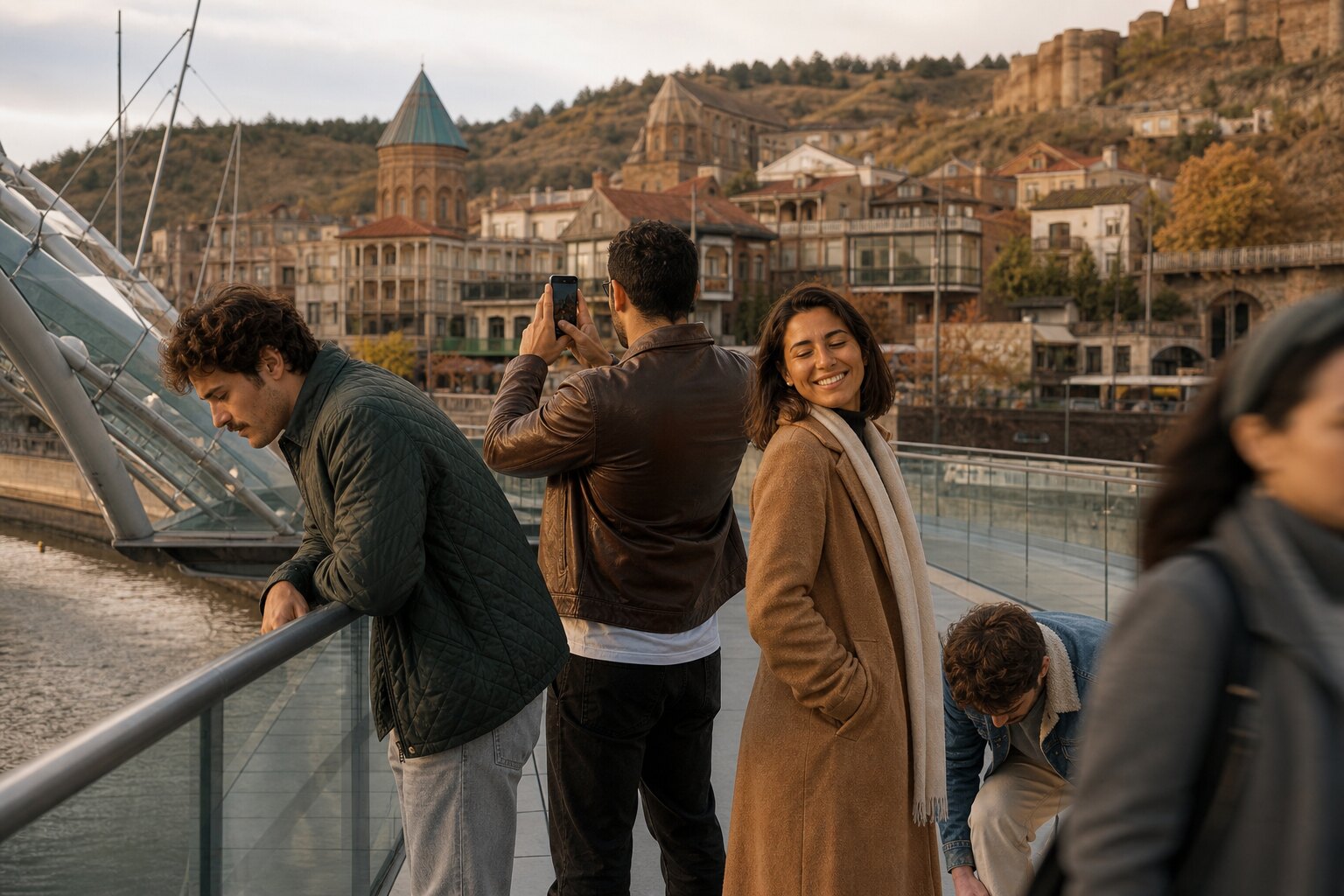
Tbilisi is enjoyed by wandering and eating. These seven are the ones we think explain it.
Everything above you can do on your own with this page open. This other thing we build for you: the same idea as always — you do not know what you got until the day before — applied to Tbilisi.
You choose where you fly from and where you are going, and we tell you what the adventure costs and roughly what getting there would cost. Flights and accommodation you book yourself: we are not a travel agency and we do not want to be.
Flat fare and a generous transfer window: 90 minutes to chain metro and bus on a single fare.
Buy the Metromoney as soon as you arrive and put ten or fifteen lari on it: that covers the whole trip, buses included, and removes the only real friction in the system.
If you want it line by line — which stations each one has, what is around every stop and how to work out a specific journey — we have all of it at our guide to the Tbilisi metro. It is one of the sites we publish ourselves, and it is free.
Tbilisi international airport is seventeen kilometres east and has no metro, but it does have a very cheap direct bus.
Two full days cover the old town, the baths, Narikala and Rustaveli. With three or four you fit Mtskheta and a trip into the mountains, which is what turns it into a different journey.
One lari a ride with the Metromoney card, whatever the distance, with 90 minutes of free transfer between metro and bus. The card costs 2 ₾ once.
The system is built around the Metromoney, bought at the kiosk in any station. It is the first thing to do on arrival, because without it the gates will not open.
Very, by European standards: eating, drinking, sleeping and getting around cost a fraction of western Europe. The flight is usually the main expense of the trip.
Citizens of the European Union can enter without a visa and stay for a year, which is one of the most generous policies anywhere. Confirm the current conditions for your nationality before travelling.
This is what we do when we travel. The other thing we do is build adventures where you do not know which activity you got until the day before.